


 T. Nashipae
Does menstruation impact athletic prowess?
.jpg)

.jpg)
.jpg)
.png)
Reading Time: 4min | Wed. 08.02.23. | 13:20
Little attention is paid to how female sportspersons manage menstruation during intense training sessions and matches
Isn't it amazing that there are more female athletes today than there were in the past? We are overjoyed that great sportswomen, like Vivian Cheruiyot, Faith Kipyegon, or Hellen Obiri have made the nation proud on a global scale. Even though this is a positive indicator, a number of things remain the same.
When talking about thr different physical and mental challenges female athletes face both on and off the field, little or no consideration is given to how they handle menstruation during training and games.
Their monthly cycles frequently subject them to a number of difficulties, both bodily and psychological, yet the problem is typically ignored.
There is little reliable information on how menstruation affects athletic performance, but according to four studies done in 2020 on more than 250 players from.a variety of sports, more than half of sportswomen believe their performance varies depending on the stage of their menstrual cycle.
Conforming to this, the holder of the World Marathon record Eliud Kipchoge recently asked athletes to speak up on such ‘sensitive’ issues, and not be silent as it evidently affects their performance.
“Can you tell us how you take part in races during your menstrual period? As senior women athletes, you should tell us what goes on. We are men and we have young daughters who will want to be athletes one day.”
From the eyes of a victim
Former world 800m champion Janeth Jepkosgei recalls how the ‘bad days’ almost cost her debut international competition at the global junior championships in Kingston, Jamaica.
"It was my first trip abroad, and everything went south. Although I was having a poor day, I still managed to win the junior race. Despite that, she braved the odds and told her coach about it
"I had to be brave and I told my coach and doctor about it.”
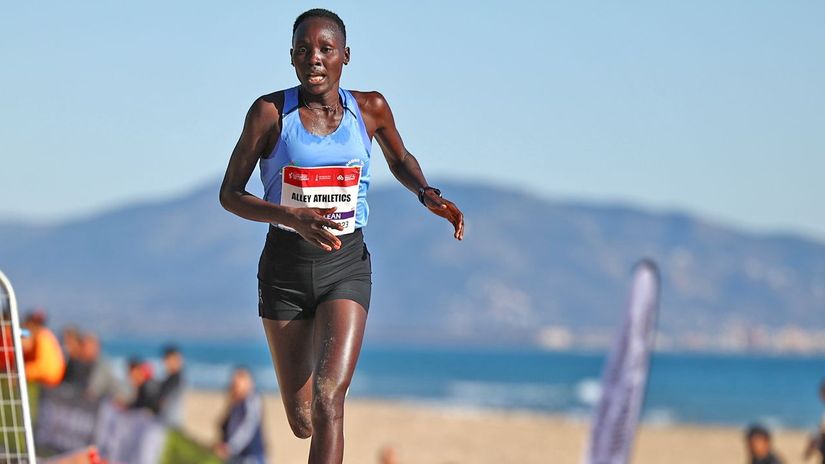
This brings me to the question, how many athletes would open up to their coaches on such matters; bearing in mind that most coaches are male?
But failure to speak up would cause more harm than good. Jepkosgei advises athletes to boldly talk about the issues.
“Talk about it. Imagine you are in the finals at the Olympic Games and you experience that moment.”
According to, Milcah Chemos, a former world 3,000m steeplechase champion, that period of the month is the most challenging for female athletes.
“For women athletes who can marshal the courage to compete during their menstruation, there are specially designed panties to use during the time of the race. The best thing especially for a young female athlete is to talk about it. We talk about this issue in low tones in training camps and before competitions.” Chemos says.
She continues by stating that many young athletes are ashamed to discuss this monthly, normal event out of fear of embarrassment.
According to Dr. Fredrick Kairithia, an obstetrician and gynecologist, that time of the month has a psychological and emotional impact on an active athlete's performance.
Fortunately, the gynecologist claims that due to their regular exercise schedules, the majority of athletes do not encounter heavy and painful flows.
But he issues a warning regarding women athletes taking medicines to delay their monthly periods, claiming that some of the medications include steroids that are prohibited by the World Anti-Doping Agency for Athletics. (WADA).
"I advise athletes not to use drugs over the counter. I urge them to consult a doctor to get a therapeutic use exception of the pills. Use of such drugs without a doctor's advice will lead to athletes testing positive for banned substances even without knowledge," Dr Kairithia says.
He urges sports fans to understand female athletes who suddenly perform poorly during that period, even when they have a past clean record.
Dr. Kairithia asserts that female athletes will not blame menstruation for poor performance in competitions, but rather will blame stomach problems or general ill health after quitting or performing poorly.
“Sometimes, it is necessary for athletes to pull out. At times, a female athlete can run a full marathon without any discomfort. It is good to understand, empathize and support female athletes. At times, they will politely tell you that they have pulled out races for personal reasons” Kinuthia states.
Most athletes use birth control tablets to control their periods, but it's not a good idea to use them immediately before an event because it could lower performance, and the risk of the tablets containing doping substances.